



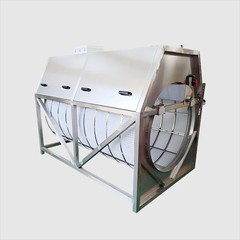

There are various types of devices and equipment used in wastewater treatment to remove contaminants and pollutants from the wastewater. Some of the most common devices include:
Screens:
Screens are an important component of many wastewater treatment systems, since they help to remove large solids, debris, and other materials from the wastewater before it enters other treatment processes. The screens can be classified based on the size of the openings in the screen, which determines the size of the particles that can be removed. Some common types of screens used in wastewater treatment include:
Bar screens: Bar screens consist of a series of bars spaced apart to allow water to flow through, but to capture large debris and solids. The bars can be cleaned manually or mechanically to remove the captured material.
Fine screens: Fine screens use a mesh or perforated plate to remove smaller particles from the wastewater. Fine screens can be used to remove materials such as hair, paper, and plastics.
Microscreens: Microscreens are similar to fine screens, but they use a finer mesh or pore size to remove smaller particles, including bacteria and other microorganisms.
Drum screens: Drum screens use a rotating drum with a mesh or perforated surface to capture debris and solids. The captured material is then scraped off the surface of the drum and removed.
Disc screens: Disc screens use rotating discs with perforations to capture debris and solids. The captured material is then removed by a scraper or brush.
The choice of screen type will depend on the size and characteristics of the particles that need to be removed, as well as the design of the overall treatment system. In addition to removing solids, screens can also help to protect downstream equipment, such as pumps and valves, from damage caused by large debris or other materials.
Grit chambers:
Grit chambers are a type of primary treatment used in wastewater treatment plants to remove heavy inorganic solids, such as sand, gravel, and other gritty materials that are too heavy to be removed by sedimentation alone. These materials can cause damage to equipment, such as pumps and valves, in the treatment process and can also accumulate in the sludge during primary treatment.
Grit chambers work by slowing down the flow of wastewater and allowing the heavy materials to settle to the bottom. The grit chamber is typically a long and narrow tank, with a width-to-length ratio of approximately 1:4, to ensure that the wastewater remains in the chamber for a sufficient amount of time. As the wastewater flows into the chamber, it slows down, causing the heavy materials to settle to the bottom.
The settled grit is then removed from the bottom of the chamber using a grit removal system, which may include grit pumps, grit classifiers, or grit conveyors. The removed grit is then sent to a landfill or other suitable disposal site.
Grit chambers can be either vortex-type or detritus-type. In a vortex-type grit chamber, the wastewater is introduced tangentially to the chamber, creating a swirling motion that helps to separate the grit from the wastewater. In a detritus-type grit chamber, the wastewater is introduced at a low velocity, allowing the grit to settle to the bottom of the chamber.
Grit chambers are typically located at the beginning of the treatment process, before primary sedimentation, to ensure that the heavy materials are removed before they can cause damage or interfere with the subsequent treatment processes.
Sedimentation tanks:
Sedimentation tanks, also known as clarifiers, are a type of primary treatment used in wastewater treatment plants to remove suspended solids and organic matter from wastewater. These tanks work by allowing the wastewater to settle, which causes the heavier solids to sink to the bottom of the tank while the lighter solids float to the top, forming a layer of scum. The clarified water is then removed from the middle of the tank.
Sedimentation tanks are typically rectangular or circular in shape, and are designed to slow down the flow of wastewater so that the solids have enough time to settle. The tanks may be equipped with mechanical equipment such as scrapers, skimmers or rakes that help to remove the settled solids from the bottom of the tank and the scum layer from the surface.
Sedimentation tanks can be designed as either primary clarifiers, which remove the majority of the suspended solids and organic matter, or secondary clarifiers, which are used after biological treatment to remove the remaining solids and microorganisms.
The effectiveness of sedimentation tanks depends on several factors, including the detention time, the settling velocity of the solids, and the design of the tank. The detention time is the amount of time that the wastewater remains in the tank, and is typically determined by the size and flow rate of the tank. The settling velocity of the solids depends on their size, shape, and density, and can be influenced by the addition of chemicals, such as coagulants, that help to aggregate the solids.
Overall, sedimentation tanks are an important component of wastewater treatment, as they help to remove the majority of the solids and organic matter before the wastewater is further treated using biological or advanced treatment processes.
Aeration tanks:
Aeration tanks are an essential component of the biological treatment process in wastewater treatment plants. The primary function of these tanks is to provide an environment where microorganisms can thrive and degrade the organic matter present in the wastewater.
In a typical activated sludge process, the aeration tank is a large basin or tank where the wastewater is mixed with a microbial culture or sludge. The sludge contains a mixture of microorganisms, including bacteria, protozoa, and fungi, that break down the organic matter in the wastewater through a process of aerobic respiration.
To promote the growth and activity of the microorganisms, the aeration tank is equipped with aeration devices, such as diffusers or mechanical aerators, that supply oxygen to the wastewater. This provides the necessary oxygen that the microorganisms need to carry out their metabolic processes.
The aeration process typically takes several hours, during which time the microorganisms consume the organic matter in the wastewater and multiply in number. After the aeration process is complete, the wastewater is directed to a secondary clarifier or settling tank, where the microorganisms are allowed to settle out and form a sludge layer. The clarified water is then removed and can be further treated in tertiary treatment processes.
The effectiveness of the aeration process depends on several factors, including the concentration of microorganisms in the sludge, the dissolved oxygen levels in the aeration tank, and the organic loading rate of the wastewater. These factors must be carefully controlled to ensure that the microorganisms are able to effectively degrade the organic matter and produce high-quality effluent.
Activated sludge systems:
An activated sludge system is a biological wastewater treatment process that uses microorganisms to break down organic matter in the wastewater. The process involves adding air to the wastewater to promote the growth of microorganisms, which then consume the organic matter and convert it to carbon dioxide, water, and new microbial cells.
In an activated sludge system, the wastewater is first treated in an aeration tank, where air is continuously supplied to promote the growth of the microorganisms. The microorganisms consume the organic matter in the wastewater, which provides them with the energy and nutrients needed for growth. As the microorganisms grow, they form clumps or flocs that can settle out of the wastewater.
After the aeration tank, the wastewater is sent to a secondary clarifier, where the flocs settle out of the wastewater and are removed as sludge. The treated wastewater is then discharged or sent for further treatment.
There are several advantages to using activated sludge systems for wastewater treatment. For example, they can effectively remove organic matter, nitrogen, and phosphorus from the wastewater, which can help to prevent eutrophication and other water quality problems. Activated sludge systems can also produce high-quality effluent, which can be discharged to surface waters or used for irrigation.
However, there are also some challenges associated with activated sludge systems. For example, the system requires careful management to maintain the proper balance of microorganisms and nutrients, since too much or too little of either can cause problems. In addition, the system can be susceptible to shock loads and other disturbances, which can disrupt the treatment process. Finally, activated sludge systems can generate large volumes of sludge, which must be treated and disposed of appropriately.
Membrane bioreactors:
A membrane bioreactor (MBR) is a type of wastewater treatment system that combines biological treatment with membrane filtration. MBR systems use a biological process to break down organic matter in the wastewater, and then use membranes to filter out suspended solids, bacteria, and other contaminants.
In an MBR system, the wastewater is first treated in an aeration tank, where microorganisms consume organic matter and convert it to carbon dioxide and water. The mixed liquor is then separated from the treated water using a membrane filter, which allows the water to pass through while retaining the solids and microorganisms. The solids and microorganisms that are trapped by the membrane are returned to the aeration tank to continue the treatment process.
There are two main types of membrane filters used in MBR systems: hollow fiber and flat sheet. Hollow fiber membranes are typically used in smaller systems, while flat sheet membranes are used in larger applications. Both types of membranes have small pores that filter out bacteria, viruses, and other contaminants.
MBR systems have several advantages over conventional wastewater treatment systems. For example, MBR systems can produce higher quality effluent than conventional systems, since the membranes provide a physical barrier to suspended solids, bacteria, and other contaminants. MBR systems also require less space than conventional systems, since the membrane filtration can replace the secondary clarifier. In addition, MBR systems can be operated at higher biomass concentrations, which can result in higher treatment efficiency and lower sludge production.
However, MBR systems can also be more complex and expensive to operate than conventional systems, since they require specialized membranes and more advanced control systems. Maintenance and replacement of the membranes can also be costly. Despite these challenges, MBR systems are becoming increasingly popular for both municipal and industrial wastewater treatment, particularly in areas where space is limited or where high-quality effluent is required.
Disinfection systems:
Disinfection systems are an important component of many wastewater treatment processes, since they help to reduce the levels of pathogenic microorganisms in the effluent. There are several different types of disinfection systems that can be used, including:
Chlorination: Chlorination is a common disinfection method that involves adding chlorine to the treated wastewater. Chlorine can kill many types of microorganisms, including bacteria and viruses. However, chlorination can also generate disinfection byproducts, such as trihalomethanes, which can be harmful to human health.
Ultraviolet (UV) radiation: UV disinfection systems use high-intensity UV lamps to kill microorganisms in the wastewater. The UV radiation damages the DNA of the microorganisms, which prevents them from reproducing. UV disinfection is a chemical-free method that does not produce disinfection byproducts.
Ozonation: Ozonation is a process that involves adding ozone to the treated wastewater. Ozone is a powerful oxidant that can kill microorganisms and break down organic compounds. Ozonation is a chemical-free method that does not produce disinfection byproducts, but it can be expensive to operate.
Membrane filtration: Some types of membrane filters, such as ultrafiltration membranes, can remove bacteria and viruses from the treated wastewater. Membrane filtration can be an effective method of disinfection, but it can be expensive to install and maintain.
The choice of disinfection system will depend on a variety of factors, including the characteristics of the wastewater, the required level of disinfection, and the available resources. In many cases, a combination of disinfection methods may be used to achieve the desired level of treatment.
Tertiary treatment systems:
Tertiary treatment systems are used to further treat wastewater that has already undergone primary and secondary treatment processes. The purpose of tertiary treatment is to remove remaining impurities and contaminants from the water to produce an effluent that is suitable for reuse or discharge to the environment. Some common tertiary treatment systems include:
Filtration: Filtration is a process that removes small particles, suspended solids, and other impurities from the wastewater. Common types of filters used in tertiary treatment include sand filters, multi-media filters, and membrane filters.
Chemical treatment: Chemical treatment involves adding chemicals to the wastewater to remove dissolved solids and organic compounds. Common chemicals used in tertiary treatment include coagulants, flocculants, and disinfectants.
Nutrient removal: Nutrient removal is a process that removes excess nitrogen and phosphorus from the wastewater. Excess nutrients can contribute to algal blooms and other environmental problems. Common methods for nutrient removal include biological nutrient removal (BNR) and chemical precipitation.
Disinfection: Disinfection is a process that kills pathogenic microorganisms in the wastewater. Common disinfection methods include chlorination, UV radiation, and ozone treatment.
Reverse osmosis: Reverse osmosis is a process that uses a semi-permeable membrane to remove dissolved solids, salts, and other impurities from the wastewater. This process can produce high-quality water that is suitable for reuse in industrial or agricultural applications.
The choice of tertiary treatment system will depend on the specific contaminants that need to be removed from the wastewater, the intended use of the effluent, and the available resources. In many cases, a combination of treatment methods may be used to achieve the desired level of water quality.
Overall, wastewater treatment devices are essential for removing pollutants and contaminants from the wastewater and ensuring that the treated water meets environmental and public health standards.